
Auto-Tune was invented in 1997 by an electrical engineer who processed seismic data for a living. Here's the full history and my honest take on how and why I use it in my own recordings.
Auto-Tune has been blamed for everything wrong with modern music by people who have never actually used it and quietly relied upon by almost every professional studio in the world for three decades. The reality of what it is, how it was created, and what it actually does in practice is more interesting and more nuanced than either the defenders or the critics usually acknowledge.
I am Tony Oso, a rock and alternative artist and home studio recordist out of Melbourne, Florida. I also have a background in electrical engineering, which means the technical origin story of Auto-Tune is one I find genuinely interesting. Here is the full history and my honest take on how I use it and why.
Who Invented Auto-Tune and When
Auto-Tune was invented in 1997 by Dr. Andy Hildebrand, an electrical engineer and research scientist whose primary background was in seismic data analysis. Hildebrand spent years working on algorithms that processed geophysical data to help oil companies identify drilling locations underground. The mathematical techniques he used to analyze seismic waveforms turned out to have direct applications in audio signal processing, specifically in the analysis and manipulation of pitch in recorded sound.
He founded Antares Audio Technologies and released the first version of Auto-Tune as a Pro Tools plug-in in 1997. The original purpose was narrow and practical: a tool for making subtle corrections to vocal pitch in studio recordings without the time-consuming process of punching in new takes for small inaccuracies. A note that was slightly flat or sharp but otherwise perfectly performed no longer required re-recording the whole phrase. You corrected it, moved on, and the performance stayed intact.
As someone with an engineering background I find it genuinely interesting that a tool this central to modern music production came directly from geophysics. Hildebrand was not a music producer looking for a better workflow. He was a signal processing engineer who recognized that the mathematics worked.
The First Major Use — Cher's Believe
The first high-profile commercial use of Auto-Tune came in 1998 with the release of Cher's Believe. The production team, working with the plug-in, discovered that pushing the correction speed to its fastest setting created a distinct robotic artifact on the vocal, the pitch jumping hard and fast from note to note rather than sliding smoothly. They used that artifact intentionally as a stylistic effect on the hook.
The result became so iconic that the technique is still called the Cher effect in production circles. It was the first time a mass audience heard Auto-Tune not as an invisible correction tool but as an audible creative choice. Whether you find the sound compelling or grating probably depends on your relationship to that specific era of pop music. What is undeniable is that it announced the technology to the world in a way that a thousand subtly corrected vocal takes never could have.
How It Became Central to Modern Music
Through the early 2000s Auto-Tune continued to spread as a production standard, mostly used subtly and invisibly in the way Hildebrand originally intended. By the mid-2000s artists like T-Pain took the heavy stylistic application and built an entire aesthetic around it. Kanye West used it as a grief-processing tool on 808s and Heartbreak. Lil Wayne incorporated it so consistently that his voice became partly defined by the effect.
The cultural backlash followed predictably. Jay-Z released Death of Auto-Tune in 2009. Critics declared it a symptom of declining vocal standards. The debate has never fully resolved because it conflates two completely different uses of the same technology: invisible technical correction and audible stylistic effect. Criticizing the first because you dislike the second is like criticizing EQ because you find scooped mid guitar tones annoying.
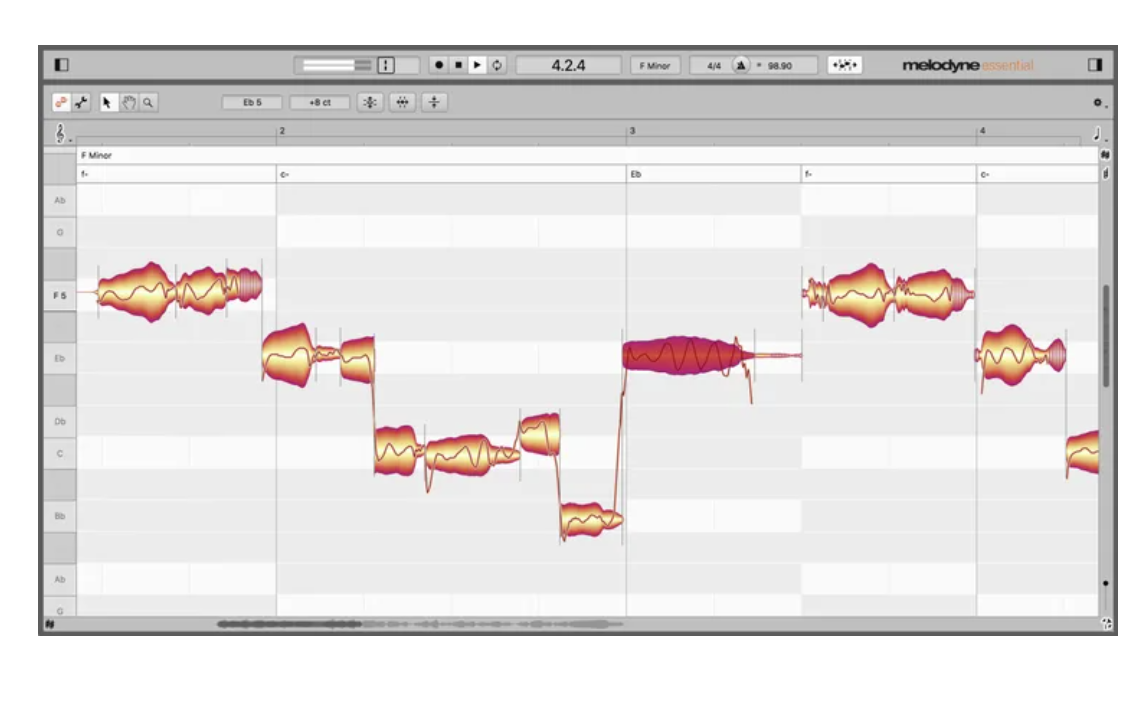
Today Antares continues developing the software with real-time pitch correction, formant shifting, and automatic harmony generation. Competing tools like Melodyne, which works differently using audio DNA analysis rather than real-time processing, give producers additional options. The category Hildebrand created in 1997 is now a standard component of professional vocal production across every genre.
How I Actually Use It
I want to be specific here because the way I use Auto-Tune is probably different from what most people picture when they hear the word.
I do not use it as a crutch for pitch problems and I do not use it as a stylistic effect. I use it as a time-saving precision tool for a specific and narrow purpose.
When I record a vocal take that is otherwise good, a phrase where the performance, the emotion, the timing, and the tone are all exactly what the song needs, I will sometimes find individual notes that are 40 or 45 cents off center. For context, a cent is one hundredth of a semitone. A note that is 45 cents flat is still technically the correct note. It is within the range that the human ear hears as that pitch rather than the pitch below it. But in the context of a recorded track, particularly when layered with other instruments, that amount of variance introduces a slight roughness that works against the clarity of the performance.
I use Auto-Tune to move that note from 45 cents off to under 20 cents off. Not to zero, which sounds artificial and removes the natural variation that makes a vocal feel human. Just to a range where the pitch reads cleanly without introducing the tuning artifacts that come from overcorrection. The note still sounds like me. It still sounds like a live performance. It is just crisper.
That is the entire extent of my use. It is a timesaver because the alternative is re-recording the phrase hoping to land that specific note better on the next take, which costs significantly more time and often produces a performance that is technically more accurate but emotionally less right than the original.
The distinction I draw is between correcting small technical variances in an otherwise strong performance and using technology to compensate for a fundamental inability to sing on pitch. The first is a production decision that respects the performance. The second is a different thing entirely and I am not interested in it. If a take has significant pitch problems throughout, the answer is more rehearsal and more takes, not heavier processing.
The Debate That Will Not End
Critics of Auto-Tune are not entirely wrong about one thing: when used heavily and indiscriminately it does flatten the natural expressiveness of a vocal. Vibrato gets quantized. The micro-variations in pitch that give a voice its individual character get smoothed away. The result can sound technically correct and emotionally sterile at the same time.
But the answer to that is not to avoid the tool. It is to understand what you are doing with it and why. Any production tool applied without thought produces worse results than no processing at all. Auto-Tune used with understanding and restraint is invisible, which is exactly what it should be in most contexts.
Hildebrand built a pitch correction tool. The music industry turned it into a cultural battleground. The reality of what it is sits somewhere between the defensiveness of its advocates and the outrage of its critics: a useful, powerful, frequently misused tool that has been part of professional vocal production for almost thirty years and is not going anywhere.
If you want to hear what my vocal production actually sounds like in practice, my music is at tonyosomusic.com/music. Tears and Identity are the best reference points for how I approach vocals, Auto-Tune included, in the context of finished recordings.