
Dynamic EQ only activates when the signal needs it. Here's what it actually is, how it differs from static EQ and compression, and the two places I use it in every mix.
Dynamic EQ is one of those tools that sounds more complicated than it is until you understand the underlying concept, at which point it becomes obvious and you start wondering why you were not using it sooner.
I am Tony Oso, a rock and alternative artist and home studio producer from Melbourne, Florida. My electrical engineering background means I think about audio tools in terms of what they are actually doing to the signal rather than just following workflow conventions. Dynamic EQ is a good example of a tool where understanding the mechanism changes how you use it.
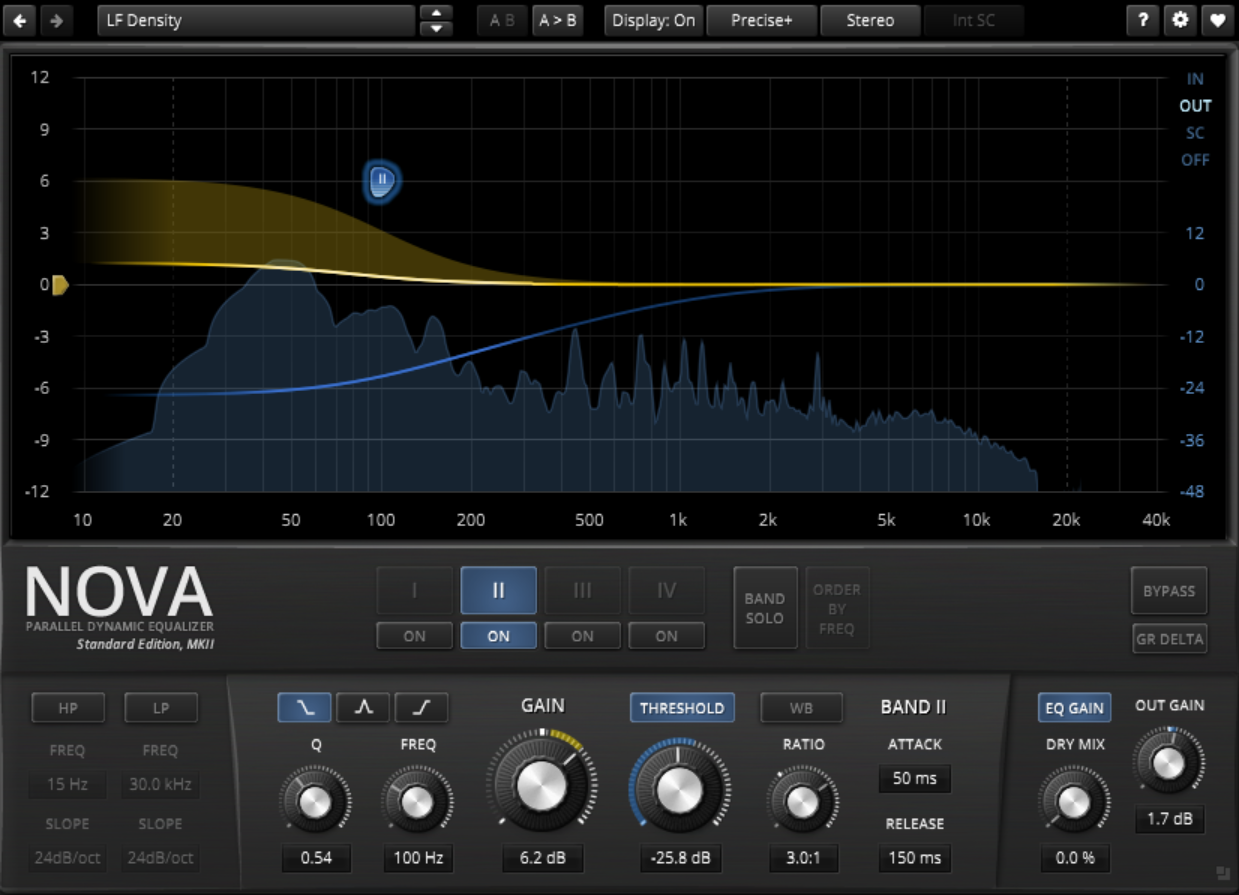
What Dynamic EQ Actually Is
A standard parametric EQ applies a fixed boost or cut at a specific frequency regardless of what the signal is doing at any given moment. If you cut 3 dB at 250 Hz on a vocal track, that cut is always active. Every word, every quiet breath, every loud phrase gets 3 dB less at 250 Hz no matter what. That is static EQ and it is appropriate for the majority of tone-shaping work.
Dynamic EQ applies a boost or cut at a specific frequency only when the signal at that frequency exceeds a threshold you set. Below the threshold the band is inactive. Above the threshold the band engages, applying gain reduction or boost proportional to how far above the threshold the signal is. The behavior is governed by attack and release parameters exactly like a compressor, but instead of affecting the overall level of the signal, it affects only the gain at a specific frequency band.
The engineering description is that dynamic EQ is a frequency-selective compressor. You are compressing a specific frequency band rather than the full spectrum. The signal at 5 kHz gets dynamically controlled while everything else passes through unchanged. That frequency-specific action is what makes it different from both a static EQ and a broadband compressor and what makes it useful for problems that neither tool handles cleanly on its own.
Dynamic EQ vs Static EQ vs Compression
The distinction is worth being precise about because people conflate these tools in ways that lead to suboptimal decisions.
Static EQ changes the frequency balance permanently regardless of signal level. Use it for general tone shaping, correcting a source that is consistently too bright or too muddy, and broad spectral decisions that apply across the whole track.
Compression controls the dynamic range of the full signal or a selected frequency band depending on the compressor. A standard compressor reduces gain across the full spectrum when the signal exceeds the threshold. A multiband compressor applies gain reduction to separate frequency bands with independent thresholds, which is closer to dynamic EQ but still applies compression across a band rather than at a precise frequency.
Dynamic EQ sits between these. It applies frequency-specific gain change only when the signal at that specific frequency demands it. The result is more surgical and more transparent than a static cut because the processing is invisible when it is not needed and activates precisely when it is.
When the problem you are solving is inconsistent, meaning it only occurs sometimes rather than across the whole track, dynamic EQ is almost always the right tool.
Where I Actually Use It
Vocals are the primary application in my work. Vocal performances have natural dynamic variation. Some phrases are louder than others. Some consonants, particularly S and T sounds, generate significantly more high-frequency energy than the surrounding vowels. A static EQ cut at 5 or 6 kHz to control sibilance makes the vocal sound dull across every word including the ones that never had a sibilance problem. A dynamic EQ band set to engage only when the high-frequency energy at that range exceeds a threshold gives you sibilance control that is invisible on normal words and active precisely when it needs to be.
My approach on vocals is to set a dynamic band targeting 4 to 8 kHz depending on where the sibilance peaks are in that specific voice, set the threshold to trigger only on the harshest S and T sounds, and use a fast attack with a moderate release so the processing engages quickly and releases before the next word arrives. The result is a vocal that sounds consistently present and clear rather than alternating between harsh and overly controlled.
The second application I use consistently is the kick and bass relationship in the low end. The kick drum and the bass guitar or bass synth occupy overlapping frequency territory, particularly in the 60 to 100 Hz range. When the kick hits and the bass is sustaining a note in the same frequency range they compete for space and the mix loses definition in the low end. The traditional approach is a static EQ cut on the bass in that range, which creates space for the kick but also makes the bass sound thinner during every moment including the ones between kick hits when there is no competition.
Dynamic EQ with the kick as a sidechain input solves this more elegantly. You insert a dynamic EQ band on the bass track targeting the fundamental frequency of your kick, somewhere between 60 and 80 Hz in most cases, and route the kick signal as the sidechain input. The dynamic EQ band then cuts the bass at that frequency only when the kick is actually hitting. Between kick hits the bass retains its full frequency content. The moment the kick lands the low-mid energy of the bass steps back slightly to let the kick punch through. The result is a low end where both elements have their moment without either permanently compromising the other.
This is more musically transparent than using a compressor to sidechain duck the entire bass signal, which affects the bass level across all frequencies every time the kick hits. The dynamic EQ version is frequency-specific and invisible to the ear when the mix is working correctly.
Other Useful Applications
Room resonance in live drum recordings is another place dynamic EQ earns its place. A room might have a specific resonant frequency, often somewhere in the 200 to 400 Hz range, that builds up during louder passages and disappears during quieter ones. A static cut at that frequency addresses the loud moments but over-processes the quiet ones. A dynamic EQ band set to engage above a threshold targets the resonance only when it actually becomes a problem.
Acoustic guitar recordings can have similar issues with specific notes or chord voicings that trigger body resonance more strongly than the surrounding playing. A dynamic band targeting the resonant frequency applies correction only when that specific note or chord is played, leaving the rest of the performance unaffected.
Dense mixes with multiple instruments occupying similar frequency ranges benefit from dynamic EQ on individual tracks because it creates breathing room that responds to the actual content of the music rather than applying a fixed tonal compromise across everything.
The Plugins Worth Using
TDR Nova is free and genuinely capable for dynamic EQ work. If you are not currently using dynamic EQ in your workflow and want to understand how it behaves before spending money, start here. The dynamic bands are clearly implemented and the visual feedback makes it easy to see what is happening.
FabFilter Pro-Q 4 has dynamic band capability built into its standard parametric interface, which makes it the most workflow-efficient option if you are already using it as your primary EQ. Setting up a dynamic band is the same process as a static band with the addition of a threshold control.
Waves F6 is specifically designed around dynamic and static EQ combined, with good sidechain options that make the kick and bass application straightforward to set up.
iZotope Neutron includes dynamic EQ with an intelligent assistant that can identify where dynamic EQ might be useful based on analysis of your signal, which is helpful while you are developing your ear for when the tool is appropriate.
The Practical Principle
Dynamic EQ is the right tool when the problem you are solving is intermittent rather than consistent. If a frequency is always too loud or always muddy, a static cut is simpler and equally effective. If a frequency is problematic only under certain conditions, dynamic EQ addresses those conditions precisely without affecting the rest of the performance.
The kick and bass sidechain application is the one I would recommend trying first if you have not used dynamic EQ before. The before and after difference in low-end clarity is immediately audible and the setup is straightforward enough to understand the mechanics of the tool while producing a result you can actually use in a mix.
If you want to hear what careful low-end management sounds like in a finished rock mix, my music is at tonyosomusic.com/music. Mistakes and Identity are the best reference points for how the kick and bass relationship sits in a dense arrangement.
If you want to dig in more on your mixing journey, check out my post on compression.