
When I first started playing bass, one of the most memorable gifts I received was a Boss CEB bass chorus pedal. At the time, I didn’t fully understand what it did, I just knew it made my bass sound bigger and more interesting. I spent hours experimenting, trying to figure out how to dial in the watery, spacious tones I loved on “Hey You” by Pink Floyd and the ultra-clean, shimmering bass sound on “Rio” by Duran Duran. That pedal ended up teaching me a lot about modulation and became one of the effects that shaped how I think about tone.
If you’re wondering what does a chorus pedal do, here’s a clear, practical breakdown.
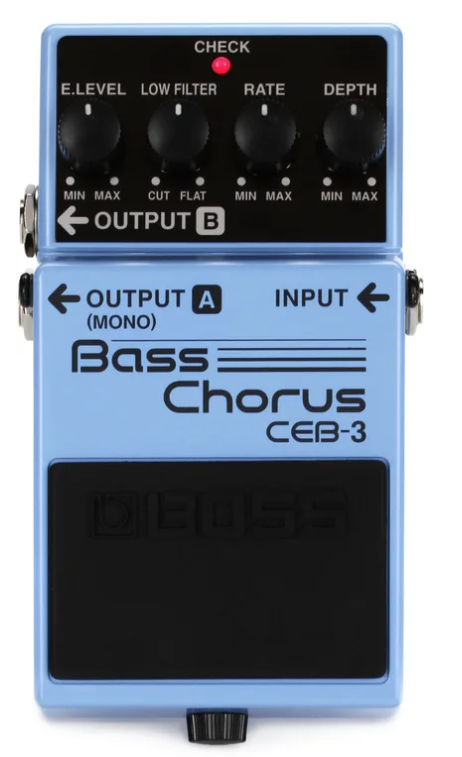
What Does a Chorus Pedal Do?
A chorus pedal thickens and widens your sound by making it seem like multiple instruments are playing the same part at once. It does this by duplicating your original signal, slightly detuning it, and delaying it by a tiny amount of time, then blending it back with the dry signal.
The result is a rich, shimmering effect that adds depth, movement, and width to your tone without sounding like an obvious echo or delay.
This is why chorus works so well for:
- Clean guitar parts
- Bass lines that need presence without distortion
- Atmospheric or emotional sections of a song
How a Chorus Pedal Shapes Your Signal
At a technical level, a chorus pedal:
- Splits your signal into dry and modulated paths
- Detunes the modulated signal slightly
- Delays it by a few milliseconds
- Modulates the pitch over time using an LFO (low-frequency oscillator)
- Blends it back with the original signal
- Most chorus pedals give you controls like:
- Rate – how fast the modulation moves
- Depth – how intense the pitch variation is
- Level / Mix – how much chorus is blended with your dry signal
Subtle settings add width and polish. Heavier settings create the classic watery or “swirling” effect people associate with ’80s music.
Chorus Pedals on Bass: “Hey You” and “Rio”
Chorus is legendary on bass!
-
“Rio” – Duran Duran
John Taylor’s bass tone on Rio is one of the most iconic chorus bass sounds of all time. Clean, bright, and swimming with movement, the chorus pedal helps the bass cut through while staying smooth and musical. -
“Hey You” – Pink Floyd
David Gilmour’s use of modulation helped inspire bass players everywhere to experiment with chorus. The effect adds a haunting, spacious quality that sits perfectly in the mix.
Learning those tones early on showed me how chorus can add character without overpowering the fundamental note.
Famous Guitar Songs That Use Chorus
Chorus pedals have been all over classic and modern guitar recordings, including:
- “Come As You Are” – Nirvana
- “Purple Rain” – Prince
- “Under the Bridge” – Red Hot Chili Peppers
- “Walking on the Moon” – The Police
In each case, the chorus helps create a sense of space and emotion, turning simple parts into unforgettable hooks.
The Boss Chorus Pedal Legacy (Including Waza Craft)
Boss is practically synonymous with chorus pedals. Their classic designs helped define the sound of entire decades.

One standout modern option is the Boss Guitar Chorus Waza Craft pedal (CE-2W). It’s a premium, all-analog chorus that recreates the legendary CE-2 and CE-1 sounds, while adding modern reliability and flexibility. If you love vintage tones but want studio-quality performance on stage, this pedal absolutely delivers.
It’s a perfect example of why chorus remains relevant, from vintage prog and new wave to modern indie and alternative music.
Final Thoughts on Chorus Pedals
So, what does a chorus pedal do?
It makes your instrument sound bigger, wider, and more alive by subtly shifting pitch and time in a musical way. Whether you’re chasing classic bass tones like “Rio”, atmospheric guitar sounds like “Hey You”, or just want to add depth to clean parts, a chorus pedal is one of the most versatile effects you can own.
If you’re curious about the pedals, instruments, and recording tools I personally use, check out my gear page, where I break down what’s actually on my board and in my studio, and why it works.
Chorus might seem simple at first, but once you really dig in, it becomes one of those effects you never want to turn off.