
Rod Stewart played to 3.5 million people on a beach. Here's what the biggest concerts in history actually tell us about music, crowds, and what live performance is really for.
I play four hour sets to a few hundred people on a good night in Florida's tourism corridor. I think about live performance constantly, what makes a room connect, what makes a crowd stay, what it feels like when the energy between a musician and an audience locks in. So when I look at these numbers, the actual attendance figures from the biggest concerts in history, what I feel is not just awe. It is genuine curiosity about what was happening in those rooms, or those beaches, or those airfields, at that scale.
I am Tony Oso, an indie rock artist out of Melbourne, Florida. Here is the list and what I actually think about it.
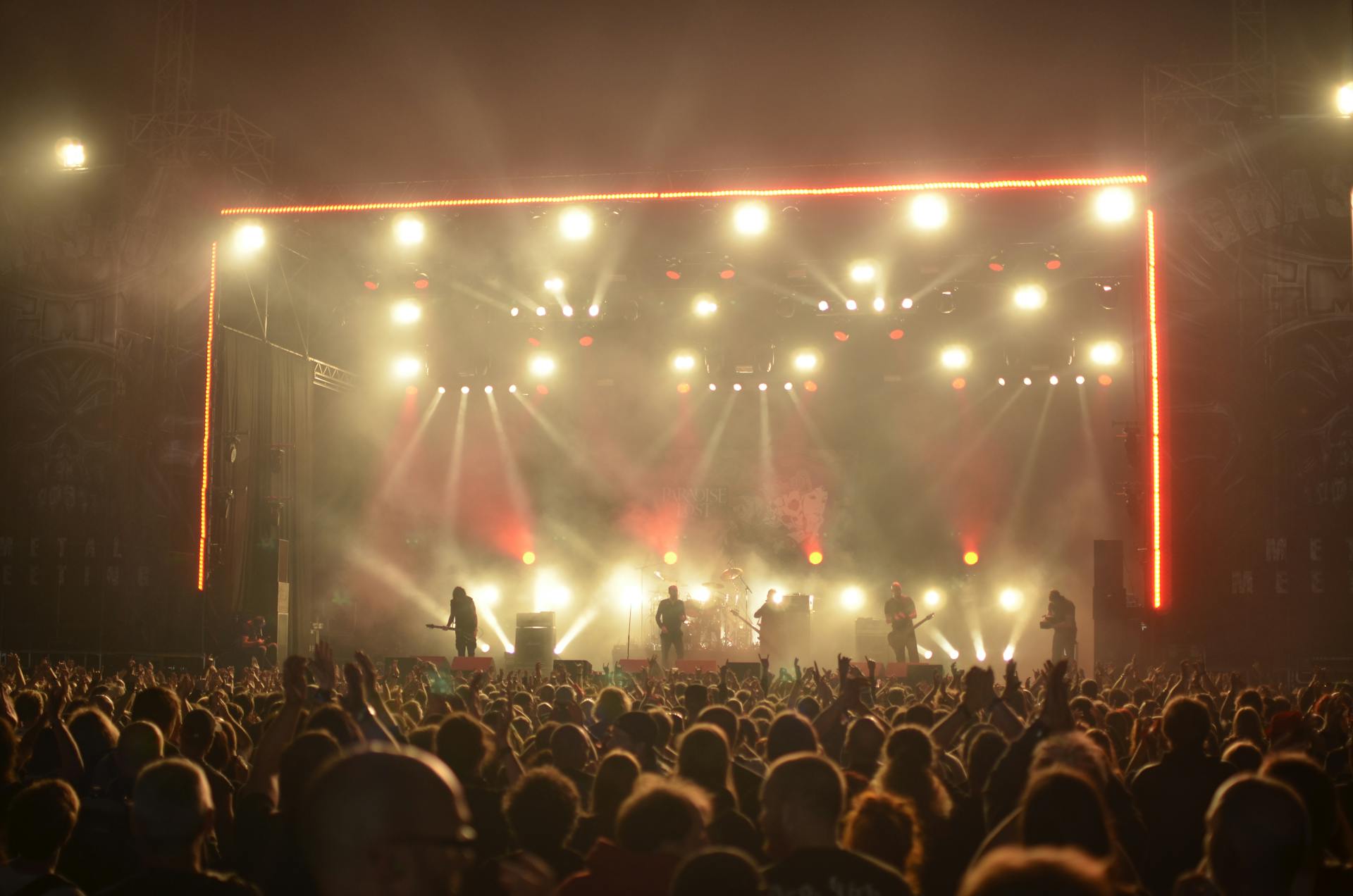
Rod Stewart — Copacabana Beach, Rio de Janeiro, Brazil — December 31, 1994
Attendance: 3.5 million people
The record. New Year's Eve on Copacabana Beach, free admission, one of the most famous stretches of coastline in the world, and Rod Stewart at the height of his post-classic rock commercial peak. Three and a half million people.
The thing that strikes me about this one is how much of the attendance was driven by factors that had nothing to do with the music. People were already going to be on that beach for New Year's Eve. The concert was the backdrop to a celebration that was happening regardless. That does not diminish what Stewart pulled off, performing for that many people is its own feat of will and logistics, but it changes what the number means. This was not three and a half million people who showed up specifically for the music. It was three and a half million people for whom the music was part of a larger moment.
That distinction matters to me as a musician. The hardest crowd to play for is not the biggest one. It is the one that came specifically for you.
Jean-Michel Jarre — Moscow, Russia — September 6, 1997
Attendance: 3.5 million people
Tied for the record and arguably more remarkable contextually. Jean-Michel Jarre is a French electronic composer who performs elaborate visual spectacles alongside his music. The Moscow concert was held to celebrate the city's 850th anniversary and was free to the public.
The fact that an electronic composer holds the world record for concert attendance alongside a classic rock legend tells you something important about what draws massive crowds. It is not genre. It is event. It is the sense that something is happening that you will not be able to say you witnessed unless you are physically there.
The Rolling Stones — Copacabana Beach, Rio de Janeiro, Brazil — February 18, 2006
Attendance: 1.5 million people
The Stones drew half the crowd Rod Stewart did on the same beach twelve years later, which either says something about the passage of time or about the difference between New Year's Eve and a February Saturday. Either way, 1.5 million people for a rock band is a number that is genuinely difficult to hold in your head.
The Rolling Stones are one of the few acts in rock history who could plausibly fill a space of unlimited capacity. Their catalog spans generations and their reputation as a live band is the foundation of everything they have built since the early 1970s. This concert was part of the A Bigger Bang tour, which was at that point the highest-grossing concert tour in history. They were not coasting. They were still the best live rock band on the planet and 1.5 million people showed up to confirm it.
Monsters of Rock — Tushino Airfield, Moscow, Russia — September 28, 1991
Attendance: 1.6 million people
This one is the most historically significant concert on the list for reasons that go well beyond the music. The Soviet Union dissolved less than three months after this show. AC/DC, Metallica, and Pantera performed at Tushino Airfield to 1.6 million people who had spent their entire lives in a country where Western rock music was restricted or outright banned.
That context changes what the attendance number represents. Those people were not just there for the music. They were there for what the music meant. Freedom of expression, cultural access, the end of something that had defined their entire lives. A concert as a political act simply by existing. I think about that show whenever I am tempted to underestimate what live music is actually capable of doing.
Paul van Dyk — Love Parade, Dortmund, Germany — July 19, 2008
Attendance: 1.5 million people
The Love Parade was an annual EDM festival that at its peak became one of the largest recurring music events in the world. Van Dyk's 2008 set drew 1.5 million people to what was essentially a massive outdoor dance party moving through the city.
EDM's relationship with live performance is different from rock or pop. The audience is not watching someone play instruments. They are part of the instrument. The crowd's energy is the show in a way that is more literal than in most other genres. A million and a half people dancing together is its own kind of music.
Garth Brooks — Central Park, New York City — August 7, 1997
Attendance: 980,000 people
Nearly a million people in Central Park for a country artist. Brooks was at the peak of a commercial run that made him one of the best-selling recording artists in American history and this show, broadcast live on HBO, was the culmination of that moment.
What I find interesting about this one is the geography. Central Park is not a natural amphitheater. There is no single sightline from which a million people can all see a stage. A significant percentage of that crowd was there for the atmosphere and the broadcast rather than for an optimal viewing experience. That is a testament to what a live event can be even when the logistics are imperfect. People want to be present for things that matter. Brooks made it matter.
New York Philharmonic — Central Park, New York City — July 5, 1986
Attendance: 800,000 people
Classical music, 800,000 people, free admission, Central Park on a July evening. This one earns its place on the list for the simple reason that it dismantles the idea that classical music is a niche pursuit for a small audience. When the barrier of ticket price is removed and the setting is right, people will show up for orchestral music in numbers that rival rock and pop. That says something worth remembering about what people actually want from live performance when you give them access to it.
Tina Turner — Maracanã Stadium, Rio de Janeiro, Brazil — January 16, 1988
Attendance: 180,000 people
The smallest number on this list and the only stadium show, but it holds a specific record: the largest paying concert attendance by a solo female artist at the time. Every person in that crowd bought a ticket. Nobody was passing by on their way somewhere else.
Turner performing at Maracanã during the Break Every Rule tour was one of the defining live moments of her career. She was in her late 40s, she had rebuilt her career from nothing after leaving Ike Turner, and she was filling one of the largest stadiums in the world with paying customers. That is a different kind of achievement than a free show on a beach, and I think it deserves to be recognized as such.
What These Shows Actually Have in Common
Looking at this list as a musician, the thread running through all of them is not the artists or the genres. It is access. Every show that crossed one million people was either free or held in an open space with no effective capacity limit. The music was the reason people cared but access was the reason the numbers got that large.
That is worth thinking about for any independent artist building an audience. The biggest barrier between your music and the people who would love it is almost never quality. It is access. Getting your music in front of people who have not heard it yet is the whole game. The artists on this list figured that out at a scale I will probably never personally operate at, but the principle applies at every level.
If you want to hear what I am building toward from here, my music is at tonyosomusic.com/music. I am not playing to hundreds instead of millions right now, but I am playing every chance I get and every show teaches me something about what it actually means to connect with a room full of people who came out for the music.