
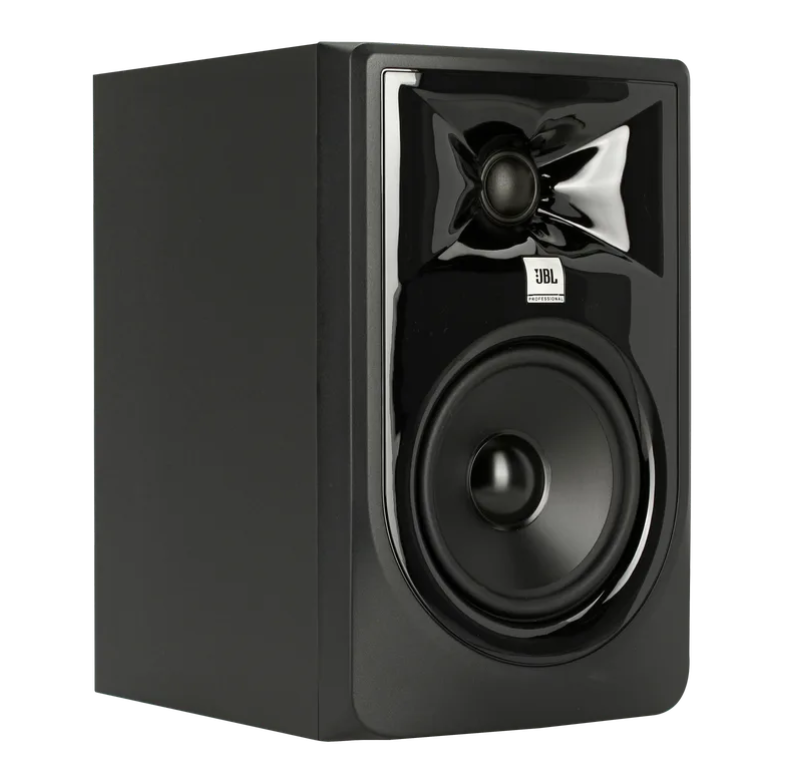
When you’re building your home studio, one of the most important decisions you'll make is choosing the best home studio speaker. It doesn’t matter how great your plugins are or how expensive your microphone is, if your studio monitors aren’t accurate, your mixes won’t translate. Over the years, I’ve tested countless speakers in different rooms, but one pair has consistently risen above the rest in terms of value, accuracy, and reliability: the JBL 305P Mk II.
These monitors have become a staple in my music studio, and I use them constantly when referencing my mixes. If you're looking for the best home studio speaker without spending thousands, the JBL 305P Mk II needs to be on your radar.
Why Accuracy Matters in Studio Monitors
A lot of speakers sound “good,” but good isn’t what you want for mixing, you want honesty.
Accurate studio monitors reveal:
- Problematic frequencies
- Muddy low end
- Harsh high-end buildup
- Balance issues
- Stereo placement problems
The goal is to create mixes that hold up everywhere: cars, earbuds, phones, TVs, and club systems. And that starts with monitors you can trust.
Why the JBL LSR305P Mk II Is the Best Home Studio Speaker in Its Price Range
1. Exceptionally Accurate Sound
The number-one reason I rely on the JBL 305P Mk II is their accuracy. These monitors give me a true representation of what’s actually happening in the mix. No hyped bass, no exaggerated highs, no coloration.
When I switch between my different reference sources, the 305P Mk II consistently shows me the truth. If something sounds off on these monitors, I know I need to fix it. That level of trust is huge when producing or mixing music.
2. Impressive Stereo Imaging
The 305P Mk IIs use JBL’s Image Control Waveguide, which creates insanely precise stereo imaging for speakers at this price.
It gives you:
- Clear separation of instruments
- Wider soundstage
- Better depth perception
- Accurate panning decisions
This makes editing and mixing much easier because you can actually feel where each instrument sits in the room.
3. Surprisingly Strong Low-End Response
Even though these are 5-inch monitors, the low end is punchy, tight, and well-controlled. It’s not exaggerated like consumer speakers, it’s just right.
I’ve mixed multiple rock, indie, acoustic, and vocal-heavy tracks using the 305P Mk II, and the bottom end always translates well to other systems. For smaller home studios, this is a huge advantage.
4. Perfect for Small Rooms
Not everyone has a perfectly treated studio (I definitely didn’t when I first started). These speakers perform extremely well in smaller spaces thanks to their:
- Rear-port design
- Balanced EQ switches
- Consistent performance at lower volumes
You don’t need a massive room or expensive treatment to get accurate mixes with these.
5. Reliable for Daily Use
I use the 305P Mk IIs every single day in my studio. They’re durable, consistent, and haven’t given me a single issue across years of intense use. Whether I’m mixing a complex session or referencing vocals I tracked that morning, these monitors never fail to deliver.
My Mixing Workflow With the JBL 305P MK II
I typically start my mixes on my VSX headphones, especially when traveling, but once I’m in the studio, the 305P MK IIs are the first pair of speakers I turn to.
I rely on them for:
- Checking EQ clarity
- Making volume and panning decisions
- Balancing vocals
- Getting a realistic sense of depth
- Final reference before mastering
They’re transparent enough that I never feel like I’m fighting the speakers to get the result I want.

Final Thoughts: The Best Home Studio Speaker for Any Budget
If you’re searching for the best home studio speaker, especially on a reasonable budget, the JBL 305P Mk II is the monitor I recommend without hesitation.
They’re:
- Accurate
- Reliable
- Affordable
- Great in small spaces
- Trusted by thousands of producers
And most importantly, they’ve helped me produce mixes that translate to every playback system.
If you want to see everything I use in my studio, including my monitors, instruments, plugins, and recording tools, check out my gear page for a full breakdown.