
Distortion is the most misunderstood effect in guitar playing. Most people who use it daily could not explain what it is actually doing to the signal. Most people who could explain it technically have not spent twenty years using it to say something through a guitar. I am in the fortunate position of being both.
I am Tony Oso, a rock and alternative artist and electrical engineer from Melbourne, Florida. I have been playing guitar for over twenty years and spent fifteen of those years working as an engineer studying signal processing, circuit design, and the physics of how electronic systems handle audio. When I use distortion in my music I understand exactly what is happening in the circuit and exactly what emotional effect I am going after. Here is the full explanation.
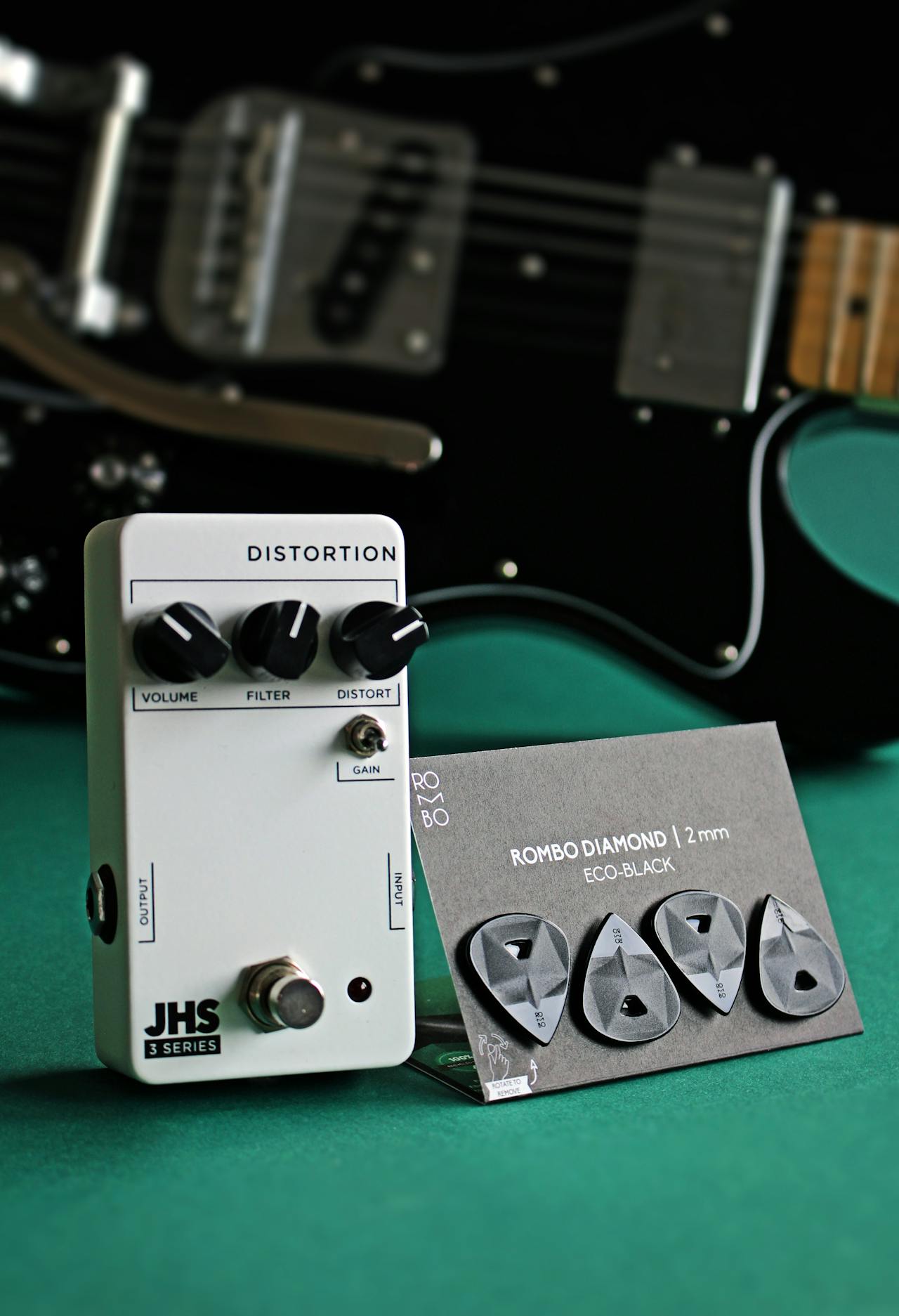
What Distortion Actually Is
In signal processing terms, distortion is any modification of the original waveform that was not in the source signal. In the guitar context specifically, distortion refers to intentional waveform clipping that adds harmonic content and changes the tonal character of the sound in a musically useful way.
A clean guitar signal is close to a sine wave. It has a fundamental frequency corresponding to the note being played and a set of harmonics above it that give the guitar its characteristic tone. When that signal passes through a circuit cleanly the output waveform closely resembles the input waveform, just amplified.
Distortion happens when the amplification stage is pushed beyond the point where it can faithfully reproduce the input. The peaks of the waveform get cut off, a process called clipping. That clipping adds harmonic content that was not in the original signal, specifically harmonics that change the spectral character of the sound. The result is what we hear as crunch, grit, or saturation depending on how extreme the clipping is and how it is implemented in the circuit.
The Physics of Clipping
There are two fundamental types of clipping and they sound different because they are doing different things to the waveform.
Soft clipping rounds off the peaks of the waveform gradually. Instead of a hard cutoff the waveform bends smoothly toward the clipping point. Tube amplifiers produce soft clipping naturally because of the physical behavior of vacuum tubes at high gain levels. The gradual onset of clipping as the signal gets louder gives tube distortion its characteristic warmth and responsiveness. The distortion gets heavier as you play harder, which means the instrument still responds dynamically to how hard you are picking. This is why players who care about touch and feel tend to prefer tube amplifiers.
Hard clipping cuts the waveform off abruptly at the clipping threshold. The tops and bottoms of the waveform are simply removed and replaced with flat lines at the maximum and minimum voltage. This produces a square-wave-like shape which contains a large number of odd harmonics and creates a more aggressive, buzzy, or compressed sound. Many solid-state distortion pedals and fuzz circuits use hard clipping. The classic fuzz pedal sound, that thick buzzy texture from the 1960s, is extreme hard clipping applied to the guitar signal.
In harmonic terms: soft clipping tends to emphasize even harmonics, which sound musical and warm. Hard clipping emphasizes odd harmonics, which sound more aggressive and edgy. Most real distortion circuits produce some combination of both, and the ratio between even and odd harmonic content is a significant part of what gives different distortion devices their tonal character.
The Three Types You Need to Understand
Overdrive simulates the natural soft clipping of a cranked tube amplifier. The sound responds to dynamics, cleaning up when you play softly and getting grittier as you dig in. This touch sensitivity is what makes overdrive the preferred choice for blues, classic rock, and country styles where expression through picking dynamics is central to the playing. My favorite overdrive sounds are the ones where the distortion is barely present on soft passages and fully engaged on hard hits.
Distortion pedals apply more gain and more aggressive clipping than overdrive. The dynamic responsiveness is reduced because the signal is being pushed harder before it reaches the clipping point, which means the sound stays saturated even at lower picking volumes. This consistency is useful for high-gain rock and metal where you need the distortion to be reliable across the full dynamic range of a performance. More sustain, more compression, less touch sensitivity.
Fuzz is the extreme end of the spectrum. The circuit deliberately crushes the signal into something approaching a square wave, removing most of the original waveform's dynamics and replacing them with that thick, buzzy harmonic saturation. Fuzz does not clean up the way overdrive does and it does not have the controlled consistency of distortion. It has its own character that either fits a song or does not. When it fits, nothing else sounds quite like it.
How the EQ of Distortion Works
One thing that most discussions of distortion miss is that different clipping types interact differently with the frequency content of the signal. Distortion is not applied equally across the frequency spectrum. Lower frequencies and higher frequencies clip at different thresholds and produce different harmonic content when they do clip.
This is part of why you EQ your guitar signal differently before and after a distortion circuit depending on the result you want. Boosting a specific frequency range before the distortion pedal changes which harmonics are most prominent in the clipped signal. This is the principle behind using a clean boost before an overdrive, or a tube screamer before a high-gain amplifier. You are shaping the frequency content that enters the clipping circuit to control which harmonics get emphasized in the output.
My post on how to use distortion without overdoing it covers the practical application of this in a mix context, including how to EQ a distorted guitar so it sits properly alongside bass, drums, and vocals. And my guitar EQ cheat sheet covers the frequency ranges that matter most for different distortion sounds and playing contexts.
How I Use Distortion in My Music
On Mistakes, the distortion is doing structural work. The guitar tone needs weight and presence to support the odd time signatures and the dense layered arrangement without becoming muddy. I use a moderate gain level with careful EQ to keep the low mids controlled and the upper mids present enough that the guitar is audible in the mix without overwhelming it.
On Welcome to the New Frontier the approach shifts. The progressive rock influences in the interlude and the guitar solo require a different distortion character than the verse and chorus, which are more straightforward alternative rock. The solo section uses more gain and more sustain to support the extended melodic lines. The verse and chorus use a cleaner, more dynamic distortion that responds to picking intensity.
The fuzz character shows up in smaller doses across the catalog, mostly as a textural element in rhythm parts rather than as a primary tone. Fuzz sits differently in a mix than overdrive or distortion and requires more careful EQ treatment to avoid washing out other instruments.
You can hear all of these approaches at tonyosomusic.com/music.
Building Your Own Distortion Sound
If you are trying to develop your distortion tone start with the gain control, not the tone controls. Gain determines how aggressively the signal is being clipped. Set it to the minimum that gives you the character you want for the style you are playing. More gain is not always better and most beginners use significantly more gain than they need.
Once gain is set, use the tone controls to place the distorted sound in the right frequency space for the mix. A distorted guitar needs enough high-mid presence to cut through and enough low-end control to not conflict with the bass. The specifics depend on the circuit and the amplifier.
If you want to go deeper than commercial pedals, building a simple overdrive circuit from a kit or schematic is genuinely worthwhile. The Tubescreamer and the Klon Centaur have been cloned and documented extensively and building either teaches you more about how clipping circuits work in an afternoon than most books on the subject do in a chapter. For someone with an interest in the electronics this is one of the more satisfying entry points into audio circuit design.
For the physics of amplification more broadly, my post on how does a tube amp work covers the vacuum tube side of this in the same level of technical depth.