
Streaming pays artists fractions of a cent. Buying a record or a CD is one of the most direct ways to keep the music you love alive. Here is why that still matters in 2026.
I want to tell you something about streaming that the platforms would prefer you did not think about too carefully.
When you stream a song, the artist receives a payment. That payment varies by platform and by a number of factors including the artist's distribution deal and their negotiated rate, but for most independent artists without a major label the number lands somewhere between a third of a cent and half a cent per stream.
To earn one thousand dollars from streaming at those rates, an independent artist needs somewhere between two hundred thousand and three hundred thousand streams. Not for the album. For one thousand dollars. In a year where the median rent in most American cities is well over a thousand dollars a month.
I am not telling you this to make you feel guilty about streaming. I use streaming. It has a place in a music listening life and a real role in how independent artists reach new audiences. What I want you to understand is that streaming as a support mechanism for independent artists, the thing people mean when they say streaming has democratized music, is largely a fiction that benefits platforms far more than it benefits the people who make the music.
Buying physical music is not nostalgia. It is one of the most economically direct ways to support the artists you love. Here is the full case.
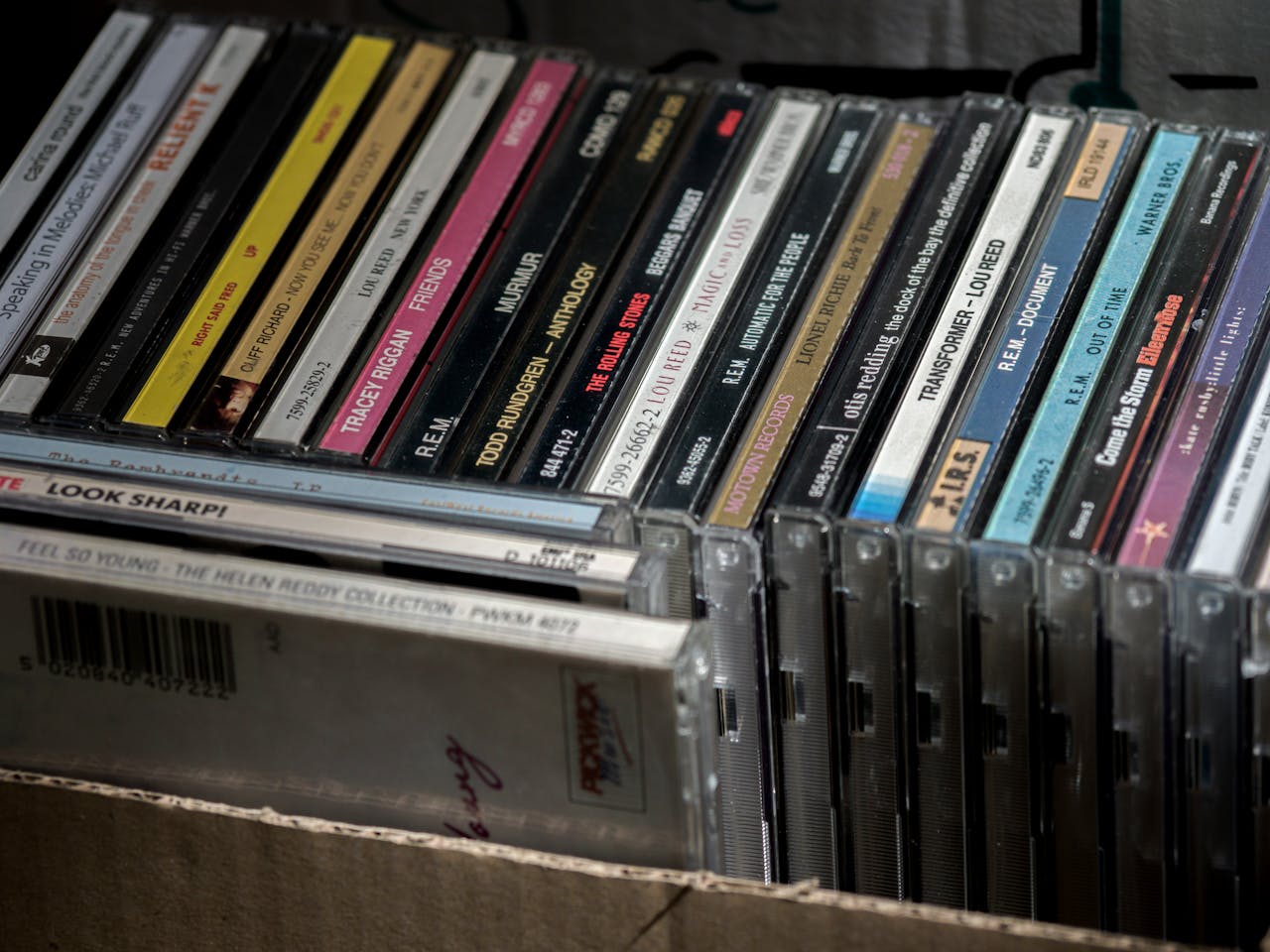
THE ECONOMICS ARE NOT CLOSE
When you buy a vinyl record or a CD directly from an independent artist, at a show or through their website or on a platform like Bandcamp, the artist receives a revenue share that is orders of magnitude larger than what streaming delivers.
A vinyl record sold directly from an artist for thirty dollars might net the artist fifteen to twenty dollars after production costs. A CD sold for fifteen dollars might net the artist eight to ten. A digital download sold through Bandcamp at ten dollars delivers around eight dollars to the artist after platform fees.
Compare that to streaming. At half a cent per stream, that same ten-dollar digital download is equivalent to two thousand streams. The vinyl record at twenty dollars net is equivalent to four thousand streams. Not four thousand streams of one song. Four thousand streams of anything in that artist's catalog.
Physical music and direct digital purchases are not marginally better for artists than streaming. They are transformatively better. The economics are not comparable. They exist in different categories.
This does not mean you should stop streaming. Discovery through streaming is real and valuable. An artist who appears in a playlist and reaches ten thousand new listeners benefits from that even if the streaming revenue is negligible. The streaming platform functions as a discovery mechanism. The question is what you do after you discover something you love.
If you love an artist, buy their music. The difference between a streaming listener and a buying listener, from the artist's perspective, is not incremental. It is the difference between a signal that costs nothing and a transaction that actually sustains.
WHY VINYL AND CDS ARE GENUINELY BACK
This is not a case I am making based on wishful thinking. The numbers support it.
Vinyl revenue in the United States surpassed one billion dollars recently for the first time since the early 1980s. That is not a niche market or a collector's hobby. That is a mainstream cultural movement that has been building for over fifteen years and shows no signs of reversing.
CD sales, which most people had written off completely, have been increasing year over year. The driver is partly a younger audience that never experienced CDs as a primary format and is discovering them as a tactile, affordable alternative to vinyl. A CD is cheaper to produce and cheaper to buy than vinyl, the audio quality is excellent, and the format carries a specific cultural resonance for people who grew up in the 1990s and early 2000s that has created its own revival energy.
The reason physical music is returning is not primarily technical. People are not buying records because they have concluded that vinyl is measurably superior to streaming audio in every scenario. They are buying records because the relationship between a listener and a physical object is a fundamentally different relationship than the one between a listener and a streaming queue.
A record has a sleeve with artwork that you hold in your hands. It has liner notes you can read. It has a side A and a side B that impose a sequence the artist intended. It requires you to get up and interact with it when the side ends. All of those things create a different quality of attention than a streaming interface optimized for passive consumption. And that attention is what music deserves at its best.
WHAT PHYSICAL MUSIC DOES FOR THE LISTENER
I have over two hundred records in my collection. I have been adding to that collection for most of my adult life. And I want to describe something that happens when I listen to a record that does not happen when I listen to the same music on a streaming platform.
I sit down with it.
That sounds trivial and it is not. The physical nature of vinyl, the need to handle the record, to set the needle, to be present enough to flip the side, creates a condition of intentional listening that streaming almost never produces. Streaming is designed to be frictionless. You can engage with it without making a single deliberate decision after the initial tap. That frictionlessness is convenient and it is also corrosive to the quality of attention you bring to what you are hearing.
When I put on a record I know I am going to sit with it for the duration of the side. That commitment changes what I hear. I notice things in recordings I have heard dozens of times that I had never noticed in streaming. Not because the vinyl is revealing hidden information, though the technical case for analog playback has some merit I have written about elsewhere. But because I am paying attention in a different way.
The music I love deserves that attention. The musicians who made it deserve a listener who is present. Physical music creates that listener more reliably than streaming does.
WHAT BUYING PHYSICAL MUSIC COMMUNICATES
There is something beyond the economics that I want to name directly.
When you buy a record or a CD from an independent artist, you are doing something that the streaming model has almost entirely eliminated from the music listening experience. You are making a choice.
Streaming is passive. The algorithm presents options, you tap, music plays. Your engagement with any particular artist is nearly effortless to begin and equally effortless to end. The artist has no way of knowing whether you chose them specifically or whether you arrived because a recommendation engine put them in front of you.
Buying physical music is active. You made a deliberate decision that this music is worth the money, the space it will occupy, and the commitment of ownership. You are now in a relationship with this music in a way that is categorically different from having it in a playlist.
For an independent artist, those two kinds of listeners are not equivalent. The buyer is the one who comes to shows. The buyer is the one who tells their friends. The buyer is the one who leaves a review, who shares the record, who becomes part of the story of how the music spreads.
Streaming builds audiences. Buying builds communities. Both matter and they are not the same thing.
THE CASE FOR BUYING TONY OSO MUSIC DIRECTLY
I want to be transparent about the personal stake I have in this argument because I think the transparency strengthens it rather than undermining it.
I make music as Tony Oso. I release it independently. I do not have a major label funding the production costs, promoting the releases, or supporting the infrastructure of building an audience. Every dollar that reaches me from music goes directly back into making more music, better recordings, more shows, and the continued existence of the Tony Oso project as a viable independent endeavor.
When you stream my music I am grateful for the listen and the discovery. When you buy my music, through my website, at a show, or on a platform where the revenue share reflects the actual value of the transaction, you are directly sustaining the capacity to make more of it.
That is not a guilt argument. It is a transparency argument. I want the people who love this music to understand what supporting it actually means in practice, so they can make an informed decision about whether and how they want to do it.
The music is made from real things. A spinal condition that changed how I understand pain and creativity. Songs written for people I was watching head somewhere bad. Years of engineering that trained a way of thinking that shows up in how I approach a recording. Two hundred records that shaped how I hear sound. Guitars I have been playing for fifteen and twenty years that carry the history of that playing in how they respond.
That is what you are buying when you buy physical music from an independent artist. Not just audio files. The record of a specific person's serious engagement with the world.
That is worth something. I hope this post helps make clear how much.
Tony Oso
Buy Tony Oso music directly at tonyosomusic.com/music
Subscribe at tonyosomusic.com to stay connected to the music and to know when new releases are available. Physical copies available at shows and through the site.